Ceramic Coating vs. PPF — What Lake Norman Drivers Need to Know
Ceramic Coating vs. PPF -
What Lake Norman Drivers Need to Know
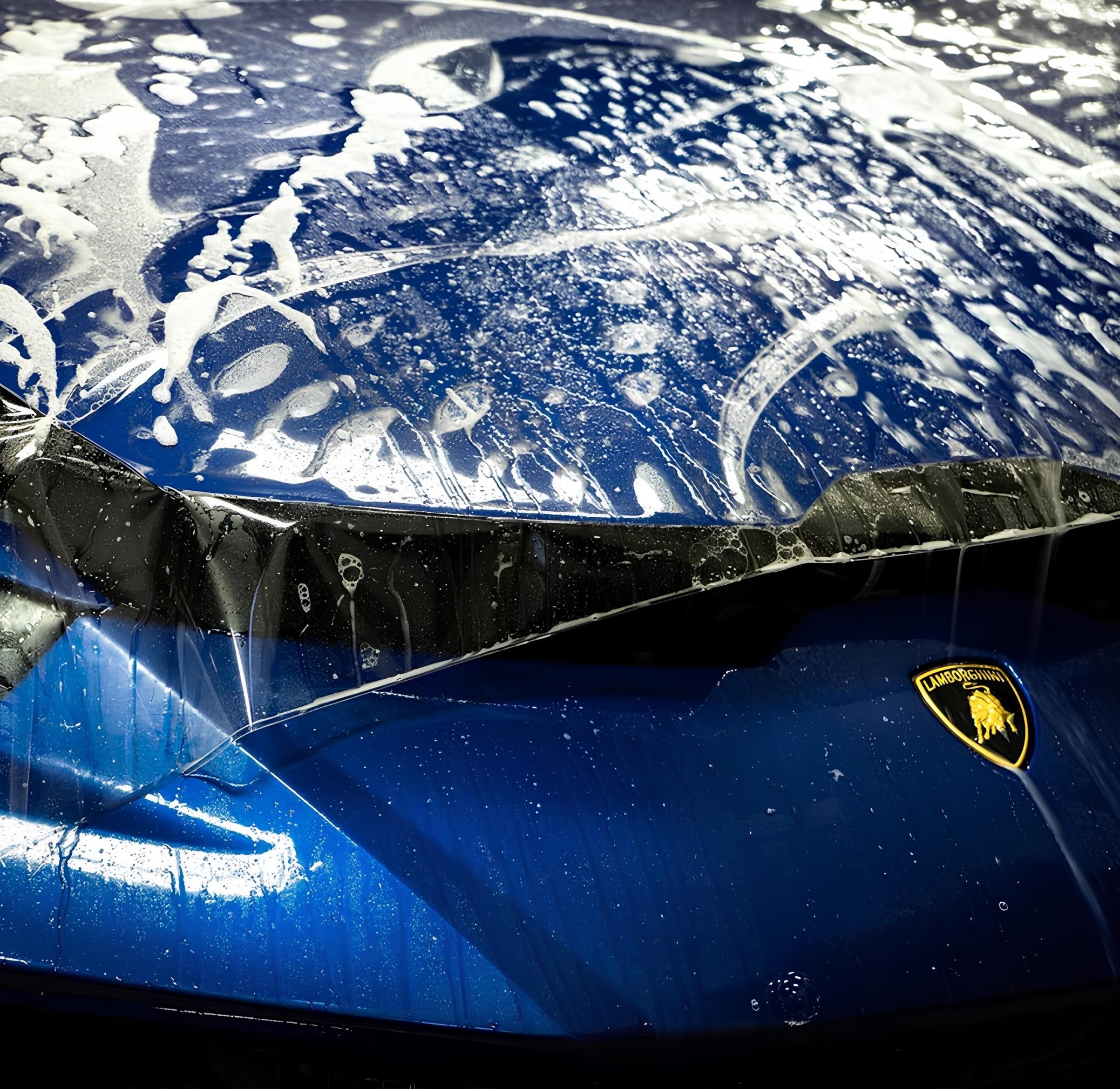
Two of the most common questions I hear at Precision Tints are: "Which should I get—ceramic coating or PPF?" and "What's the difference?" Most people assume they do the same thing. They don't. They're both paint protection, but they protect against completely different threats. Understanding the difference is the key to choosing right for your vehicle and your lifestyle.
What Ceramic Coating Is and How It Works
Ceramic coating is a thin, transparent layer of protection that bonds to your car's clear coat. Think of it as liquid glass. Once applied and cured, it creates a hydrophobic surface that repels water, makes contaminants slide off more easily, and gives your paint an incredible shine.
We use IGL Coatings—a professional-grade ceramic that we apply after full paint decontamination and correction. Here's what that process looks like:
Decontamination: We remove all the contamination embedded in your clear coat—rail dust, tree sap, industrial fallout, brake dust. We use clay bars, chemical decontamination, and mechanical polishing if needed.
Paint Correction (if needed): If your paint has swirls, scratches, or oxidation from sun damage, we polish it out. This step is critical because ceramic coating locks in whatever finish you have—if your paint is swirled, ceramic makes it permanently shiny and swirled.
Ceramic Application: We apply the IGL coating with a microfiber applicator, layer by layer, ensuring even coverage. Then it cures for 12–24 hours before your car is road-ready.
The result: a surface that stays cleaner longer, sheds water and dirt more easily, and looks wet even in sunshine. That shine lasts 3–5 years depending on maintenance and Lake Norman's specific conditions (humidity, UV, tree sap).
What Paint Protection Film (PPF) Is and How It Works
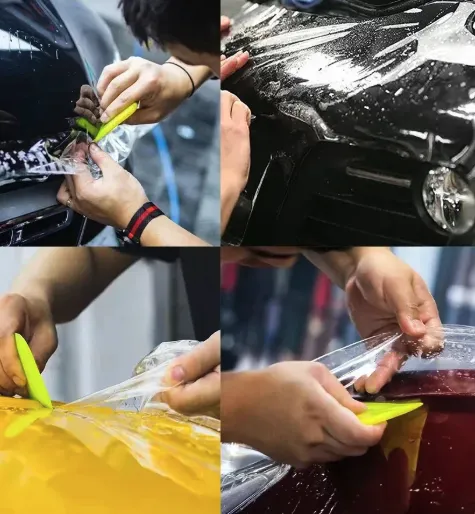
Paint Protection Film—PPF or "clear bra"—is a thick, transparent urethane film that adheres to your paint. We use STEK, which is a premium brand that's self-healing (minor scratches disappear as the film warms up) and maintains perfect clarity for a decade.
PPF is installed on the parts of your car most vulnerable to rock chips and road damage: hood, front fenders, headlights, mirrors, door handles, and rocker panels. Some customers do full-body coverage, which protects every exposed painted surface.
Here's what PPF does: it absorbs impact. A rock kicks up and hits your hood. It hits the PPF, not your paint. Gravel flies at your front bumper on a highway drive? The PPF takes the hit. Even a light scratch from a branch or a careless person with a shopping cart impacts the film, not your clear coat. The paint under that film stays pristine.
STEK PPF has a self-healing top layer that uses ambient heat to erase minor scratches and swirls. So if you get a light scratch that doesn't go through the film, park in the sun, and it heals itself. That's a real feature, not marketing hype.
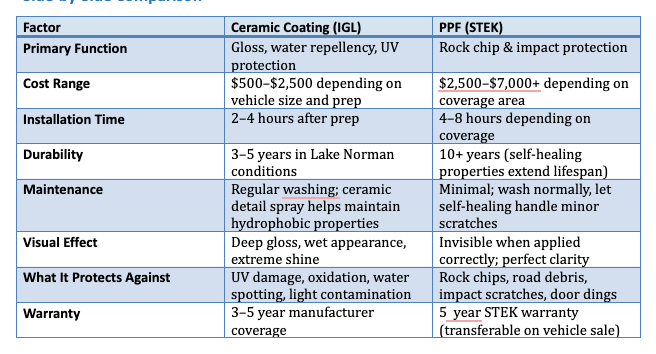
Side-by-Side Comparison
When Ceramic Coating Makes More Sense
You want ceramic coating if:
Your car is mostly parked in a garage or carport (minimal rock chip exposure).
You drive mostly in town and on well-maintained roads (less highway exposure).
You care about paint shine and water beading—the visual "wow factor."
You drive a lot and want easier washing and maintenance. Ceramic-coated cars shed dirt and water better, so they actually need less frequent detailing.
You're budget-conscious. Ceramic coating is 3–4x cheaper than full-body PPF.
You own a truck or daily driver that doesn't turn heads (protection is not your primary concern).
When PPF Makes More Sense
You want PPF if:
Your car is brand new or recently repainted, and you want to keep the paint perfect for the next decade.
You drive on highways regularly or live on gravel roads (common around Sherrills Ford and Troutman near Lake Norman).
Your car is high-end, rare, or you're planning to keep it long-term—resale value or collector status matters.
You park outside regularly and don't want to worry about rock chips ruining your paint.
You own a sports car or have a custom paint job (the investment is worth protecting).
You commute on I-77 or other heavy-traffic highways where road debris is constant.
Lake Norman Conditions — Which Holds Up Better Here?
Here's the reality of Lake Norman living: you get intense UV exposure from the water reflection. You get humidity that accelerates oxidation. You get tree sap from lakeside trees. You get gravel roads, especially heading north toward Denver and Statesville. And if you live on the water or use the lake for recreation, you get salt spray that attacks clear coat.
In these conditions, here's what I recommend:
Best Case Scenario: Full-body PPF (STEK) on a new or nearly-new vehicle. This protects against everything—chips, UV damage, salt exposure, tree sap. Your paint stays perfect for a decade. Cost is high, but so is the protection.
Runner-Up: Ceramic coating (IGL) on a vehicle you've owned for 3+ years. The paint already has character and minor imperfections. Ceramic makes it shine, protects it moving forward, and costs 1/3 of what PPF costs.
Practical Hybrid Approach: PPF on high-impact zones (hood, fenders, mirrors) + ceramic coating on the rest of the vehicle. This gives you targeted rock chip protection where it matters most, full-body shine and UV protection from the ceramic, and a total cost somewhere in between. This is honestly what a lot of smart Lake Norman drivers choose.
The Takeaway
Ceramic coating and PPF are both legitimate paint protection tools. They just do different jobs. Ceramic makes your paint look incredible and protects against oxidation and UV damage. PPF protects against impact damage and keeps your paint flawless under the film.
If you're on Lake Norman and your car is new, PPF makes sense. If your car is 3+ years old or you're more concerned with shine than perfection, ceramic coating is the way to go. And if you can do both (at least PPF on the hood and front end plus ceramic everywhere else), you're playing the game at a professional level.
Call Precision Tints at (704) 818-6622 or visit precisiontints.pro to schedule a free consultation. We'll assess your vehicle and your lifestyle and recommend the right protection strategy for you. No pressure, no sales pitch—just honest advice from people who've protected thousands of Lake Norman vehicles.
—Zach Beck, Precision Tints
Mooresville, NC | Serving Lake Norman, Davidson, Cornelius, and Huntersville
BLOG POST 3: How to Choose the Right Window Tint for Your Vehicle in North Carolina
Window tinting isn't a one-size-fits-all purchase. The type of film you choose, the darkness level, and the way it's installed all matter. Get it right, and you have a car that's cooler, better-protected, and more private for the next 5–10 years. Get it wrong, and you might end up with tint that fades, bubbles, or doesn't meet North Carolina law. This guide walks you through every decision you need to make.
Why All Window Tint Is Not the Same
There are three main types of window tint film: dyed, carbon, and ceramic. They're not equally good.
Dyed Tint: This is the cheapest option. A layer of dye sits between the adhesive and the top protective layer. It blocks some heat and light, but it fades over time—especially in harsh North Carolina sun. It typically lasts 3–5 years before the color shifts and the effectiveness drops. If you're on a tight budget and plan to sell or replace your car in a couple of years, dyed tint is okay. But it's not what we recommend, and most people regret it after year three.
Carbon Tint: This is the middle ground. Carbon particles replace dye, which means the tint doesn't fade. It blocks heat and light better than dyed tint, lasts longer (7–10 years), and maintains its color. It's more expensive than dyed but cheaper than ceramic. If you want solid performance without breaking the bank, carbon is a good choice.
Ceramic Tint: This is the best. Ceramic particles absorb heat (instead of reflecting it, like carbon does) and block UV rays more effectively. It doesn't interfere with radio signals or phone reception. It stays clear and true to color for 10+ years. It's the most expensive of the three, but the performance and durability justify the cost. At Precision Tints, we recommend ceramic tint for most customers.
NC Tint Laws — What You Actually Need to Know
North Carolina tint law changed on December 1, 2025. Here's what you need to know:
Front Windows: Minimum 32% Visible Light Transmission (VLT). That means you can block up to 68% of light. 32% is dark enough to provide real privacy and heat rejection without being illegal.
Side and Rear Windows: You can go darker. Many people do 20–25% on the rear and sides.
Rear Window: You can tint completely dark (0% VLT) if you want.
Color: No red, amber, or yellow tint allowed. You can only use neutral grays and blacks.
Side Mirrors: Both side mirrors must be visible and reflective without obstruction. You can't tint them.
Why Does This Matter? If your tint is darker than 32% VLT on your front windows, you can get a citation. Some municipalities enforce this more strictly than others, but it's the law. Mooresville and surrounding areas are generally reasonable, but if you're driving around Lake Wylie or into South Carolina, different states have different rules. We always use 32% on front windows to keep you legal everywhere.
The Performance Question — How Much Heat Do You Want Out?
Heat rejection and tint darkness are not the same thing. A dark tint blocks light, but a good tint blocks heat (infrared radiation). This is where ceramic really shines.
Light Blocking (VLT): This is what determines legal darkness. 32% VLT blocks a lot of light and is perfectly legal on front windows.
Heat Rejection: Premium ceramic tints can reject 50–99% of infrared heat—the stuff that actually warms your car. A 32% ceramic tint will reject significantly more heat than a 32% dyed tint because the technology is different.
My recommendation: Choose 32% VLT on front windows for legal compliance and substantial light blocking. Choose ceramic film for the heat rejection performance. Together, they keep your car 20 degrees cooler than untinted glass and protect you from UV exposure.
How Long Do You Want It to Last?
Window tint is not permanent. It fades over time, especially in Lake Norman's sun. Here's the realistic timeline:
Dyed Tint: 3–5 years before noticeable fading.
Carbon Tint: 7–10 years without significant fading.
Ceramic Tint: 10–15 years with minimal fading.
If you plan to keep your car for 5+ years, ceramic is worth the extra investment. You won't have to retint, and the film stays effective the whole time. If you're a car flipper or change vehicles every 2–3 years, carbon is fine and saves you money.
Common Mistakes That Cost People Money
Mistake 1: Going too dark on front windows. I see people with 5% or 15% VLT on their front windows. It looks cool, but it's illegal, reduces your visibility (which is a safety issue), and if you get pulled over, you'll get a ticket and have to remove it. Don't do this.
Mistake 2: Choosing the cheapest tint available. You might save $200 up front by using budget dyed tint, but you'll retint your car in 3 years and spend $400 total instead of $600 for ceramic that lasts a decade. Bad math. We see people regret this all the time.
Mistake 3: Using an installer who rushes the job. Window tinting is precise work. If your tint has bubbles, creases, or uneven darkness, it looks cheap and performs worse. Precision Tints takes 2–4 hours per vehicle because the work demands it. Shops that tint a car in 45 minutes are cutting corners.
Mistake 4: Not waiting for the curing period. Tint needs 24–48 hours to fully set before you roll your windows down. People get impatient and roll them down after a few hours, which can cause the edges to lift or bubbles to form. Follow the instructions. Wait the full time.
What Precision Tints Recommends for Lake Norman Drivers
Based on 4+ years of tinting vehicles in this area, here's what works:
Film Type: Ceramic tint. It performs better in our humidity and UV exposure, lasts longer, and the quality difference is noticeable.
Front Windows: 32% VLT ceramic. Legal, private, effective, and durable.
Rear Windows & Back: 20% VLT ceramic. Darker for privacy and heat rejection, still legal in North Carolina.
Installation: Full service. We clean your windows, measure precisely, apply film carefully, and cure properly. No rushing. The result is a professional install that lasts.
The Takeaway
Choosing the right window tint comes down to three decisions: film type (ceramic is best for Lake Norman), darkness level (32% front for legal compliance, 20% rear for privacy), and installation quality (work with professionals, not hobbyists).
Don't be penny-wise and pound-foolish with the cheapest dyed tint. Spend a bit more for ceramic now and you'll have a cooler, better-protected car for a decade. That's a smart investment.
Call Precision Tints at (704) 818-6622 to schedule a free quote and consultation. We'll measure your car, answer all your questions, explain the law, and install your tint right. We're open Monday–Friday, 9 AM–7 PM, serving Mooresville, Lake Norman, Davidson, Cornelius, Huntersville, and surrounding areas.
—Zach Beck
Precision Tints
131 Crosslake Park Dr #207, Mooresville, NC 28117
precisiontints.pro | (704) 818-6622
