How Long Does Ceramic Coating Last in NC?
The Short Answer: 3 to 5 Years, Sometimes Longer
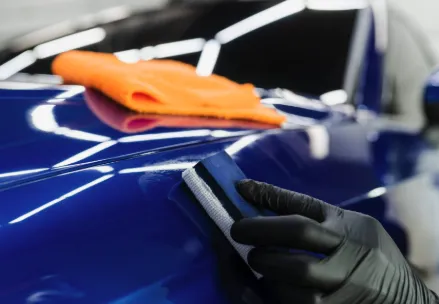
One of the most common questions I get at Precision Tints is how long does ceramic coating last. The honest answer depends on the product, the prep work, and how you take care of it afterward. A professional-grade ceramic coating applied in a controlled shop environment will typically last 3 to 5 years here in North Carolina. With the right maintenance routine, some coatings push past that into the 6- to 7-year range.
I use IGL Kenzo on most vehicles that come through our Mooresville shop. IGL rates Kenzo for up to 5 years when applied by a certified installer and properly maintained. That lines up with what I see in the real world — customers who follow the maintenance schedule get the full life out of their coating without any issues.
Why North Carolina Is Harder on Coatings
Not every state puts the same stress on a ceramic coating. North Carolina throws a few curveballs that matter.
Summer pavement temperatures around Lake Norman regularly push past 130 degrees, and UV intensity stays high from May through September. That constant sun exposure is the number one factor that shortens coating life on vehicles parked outside. The good news is that a properly cured SiO2 layer handles heat well — it does not break down the way wax or sealant does under the same conditions.
Then there is pollen season. From late March through June, yellow pine pollen covers everything. On bare paint, pollen sits in the clear coat and can etch if left wet. A ceramic coating gives you a slick surface that releases pollen with a simple rinse instead of letting it bond. That said, pollen buildup still needs to be washed off regularly — the coating helps, but it is not a free pass to skip maintenance.
Road salt is less of an issue here than up north, but we do get occasional ice treatments on I-77 and Hwy 150 in winter. Those chemicals can degrade a coating faster if they sit on the paint for weeks without washing.
What Actually Shortens Coating Life
After doing this since 2018, I can tell you the biggest factor is not the product — it is maintenance. Coatings fail early because of how the car gets washed, not because the chemistry gave out.
Here is what cuts coating life short:
- Automatic car washes with brushes — the abrasive contact wears through the coating layer faster than anything else
- Skipping washes for weeks — contaminants like bird droppings, tree sap, and road film break down the hydrophobic layer when they sit too long
- Using heavy degreasers or dish soap — these strip the SiO2 layer instead of cleaning it
- Parking outside full-time with no shade — constant UV exposure accelerates degradation, especially on horizontal panels like the hood and roof
What Helps It Last Longer
The flip side is straightforward. Garage-kept vehicles with regular hand washes using pH-neutral soap will get the maximum life from any coating. I recommend a SiO2 booster spray every 6 to 12 months — it tops off the hydrophobic layer and keeps water beading tight. IGL makes a maintenance line specifically designed for their coatings, and that is what I tell every customer to use.
A light wash every two weeks is the sweet spot. You do not need to detail the car every time — just a rinse, a pH-neutral wash, and a proper dry. That alone keeps the coating performing at its peak.
Professional Coating vs. DIY: A Real Difference
DIY ceramic coatings from auto parts stores typically last 6 months to maybe 2 years. They are thinner, less concentrated, and the application does not include the paint correction and decontamination that a professional install requires.
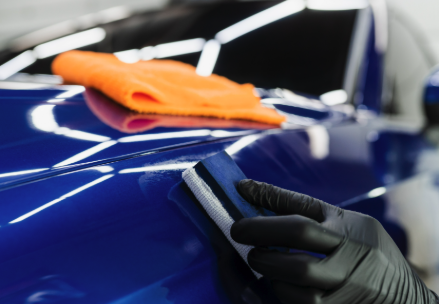
When I coat a vehicle at Precision Tints, the prep work takes longer than the coating itself. We clay bar, polish out swirl marks, and decontaminate the surface before any coating touches the paint. That prep is what lets the coating bond properly and last its full rated life. Skip the prep, and even the best product will not hold up.
IGL Kenzo is a 10H-rated coating — the hardest available — and it requires certified installation. That certification exists because proper application matters that much.
How to Know When Your Coating Needs Replacement
The first sign is water behavior. A fresh coating produces tight, round water beads that sheet off quickly. As the coating wears, water starts to flatten out and cling instead of beading. When you notice water sheeting instead of beading after a wash, the coating is getting thin.
The second sign is that contaminants start sticking more. Bird droppings or pollen that used to rinse off easily now require scrubbing. That means the slick hydrophobic surface is wearing down.
When you hit that point — usually around year 3 to 5 depending on conditions — it is time for a fresh application. Some vehicles need a light polish before recoating, others just need a decontamination wash. Either way, recoating is simpler and faster than the first application because the paint is already in good shape underneath.
Get Your Coating Done Right the First Time
If you are in the Mooresville, Cornelius, Davidson, or greater Lake Norman area and want a ceramic coating that actually lasts, give us a call at (704) 818-6622. I will walk you through the options, show you what IGL Kenzo looks like on a finished vehicle, and give you an honest timeline for your specific situation. No overselling — just the real numbers based on 8 years of doing this in North Carolina.
